
News — Dissolution Baskets
Use and Care of PTFE-Coated Dissolution Accessories
Posted by Pam Bialiy on

Polytetrafluoroethylene (PTFE) coatings are frequently used on Dissolution bath accessories. Many individual monographs specify this coating on Sinkers, Baskets, Paddles and Vessel interiors. The coating on the accessories can, over time, develop chips or scratches that can expose the substrate to corrosion and affect the results of the test. Technicians handling these coated parts should be familiar with the following guidelines to help extend their service life. Parts with corrosion should be removed from service. Handling The PTFE coatings are applied at the factory in order to maximize adhesion and durability. The coating, however, is susceptible to chipping and scratching...
APP 1 Clip vs Push-On Style Baskets
Posted by Pam Bialiy on

The following article has been authored by John Heaney. Push-on style baskets have been used for dissolution testing for quite a few years at this point. While they’re generally accepted as equivalent to the clip style baskets pictured in USP <711>, it’s important to be aware of the differences between the two designs. Both have some advantages and disadvantages depending on the method. The clip style is officially recognized in <711>, so there is never any debate as to whether the clip style baskets are acceptable for testing. Furthermore, all the wetted materials are 316 Stainless Steel, which is chemically...
Benefits of Sintered/Calendared vs Standard Mesh for APP 1
Posted by Pam Bialiy on
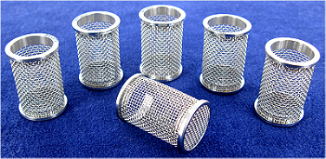
The following article has been authored by John Heaney. Calendared and sintered Stainless Steel (SS) mesh baskets are the norm for dissolution testing with good reason. This mesh provides several benefits to the basket that not just improves it but makes it usable in a lab in the first place. Calendared mesh is made by taking the SS wire mesh and passing the mesh between two rollers held at a specific distance from each other. The rollers press the high spots of the mesh, where the wires overlap, into the same height as the rest of the mesh. This results...
- Tags: APP 1, Apparatus 1, basket method, Calendared, Dissolution Baskets, Mesh, Sintering, SS Mesh
Cleaning Stainless Steel
Posted by Pam Bialiy on
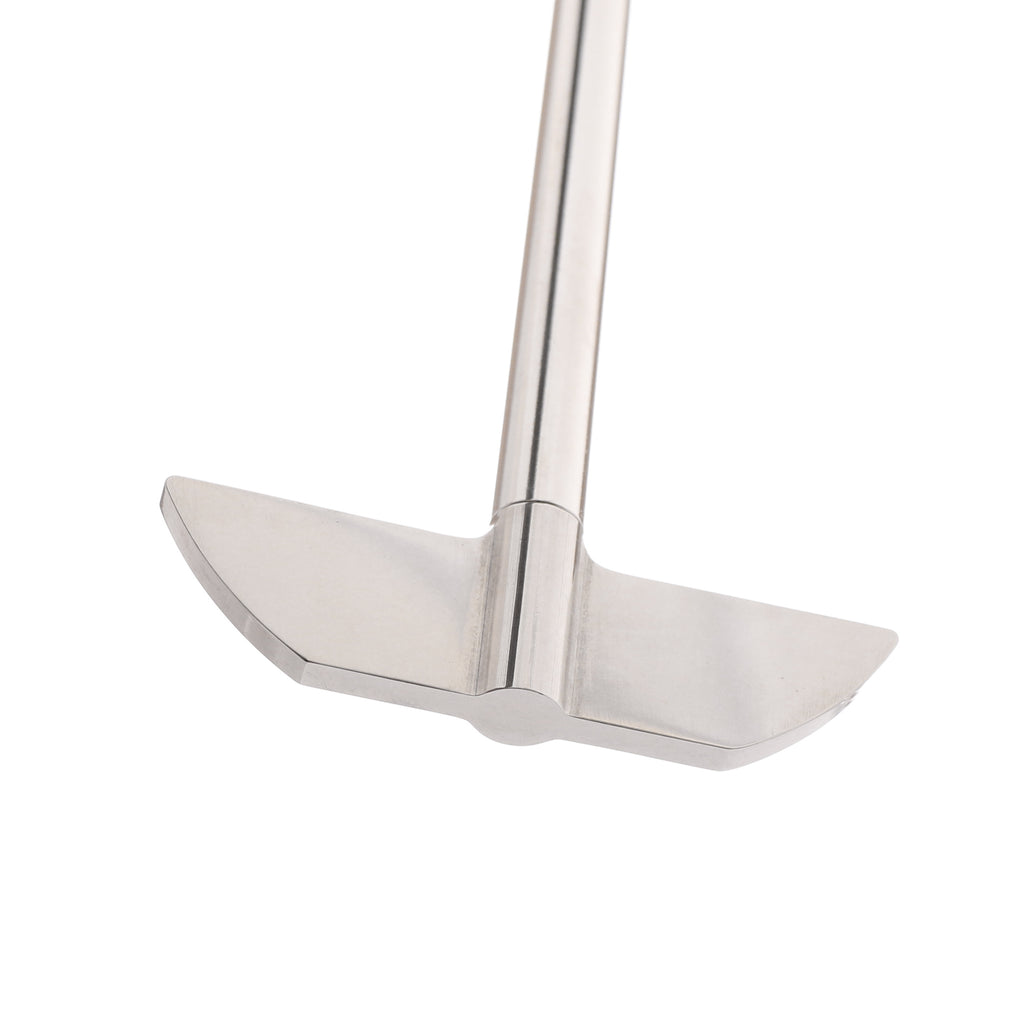
The following article has been authored by John Heaney. Dissolution components are often made of 316 Stainless Steel (316 SS) or equivalent as it is a material specified in USP <711> for the construction of both Apparatus 1 (Baskets) and Apparatus 2 (Paddles). 316 SS has a reputation for being impervious to corrosion but that is not the case as it is merely resistant to corrosion. It requires care and maintenance just like any other item in the lab. 316 SS’s corrosion resistance is due to the inclusion of additional Molybdenum to the mixture for the steel. This means compared...