
News — pore size
Choosing the Right Filtration Strategy for Automated Dissolution Testing
Posted by Pam Bialiy on
Sample filtration is a critical part of dissolution testing, yet there is no universal solution that works for every application. The most effective filtration approach depends on the specific analytical method, sample properties, and filter characteristics involved. Each method should be evaluated individually to ensure optimal performance and reliable results. For established methods that already specify a particular filter type or micron rating, there may be little flexibility in filter selection. However, when developing new methods, a successful filtration strategy should be based on three key considerations: 1. Analytical Method Requirements The analytical technique being used—typically UV spectroscopy or HPLC—plays...
Filter Equivalence Studies
Posted by Pam Bialiy on
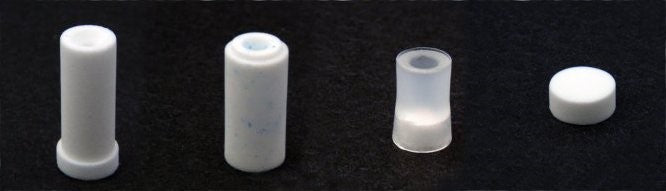
The following article has been authored by John Heaney. Filtering is a required step in processing dissolution samples as it both stops the dissolution of larger particles by separating them from the sample and removes any material that may interfere with the analysis by UV/Vis spectroscopy, HPLC, or UPLC. There are a plethora of materials, shapes, sizes, and porosities available to choose from to ensure that a filter is appropriate for a specific method. In many cases it’s possible to find equivalent filters from other suppliers. However, that equivalence needs to be proven, ideally during the development of the dissolution...